Interest Deferral
The USDA’s deferral of interest charges gives you extra breathing room on your crop insurance bill. If your premium is due between July 1 and September 30, 2026, you now have up to 60 additional days to make that payment without any interest accruing during that extension. In practical terms, this means more flexibility to manage cash flow during a tight season—especially when weather, input costs, or markets are already stretching your budget. After the 60‑day window (or your policy’s termination date, if earlier), interest would begin again, but this temporary relief helps ensure you can keep your coverage in place without immediate financial pressure.
Plant Dates
-
South Dakota: Campbell, Corson, Dewey, Perkins, Walworth, Ziebach
✅Early Plant Date: 3/26/2026 Final Plant Date: 5/15/2026
North Dakota: Adams, Emmons, Sioux
✅Early Plant Date: 3/27/2026 Final Plant Date: 5/31/2026
-
South Dakota: Campbell, Corson, Dewey, Perkins, Walworth, Ziebach
✅Early Plant Date: 4/10/2026 Final Plant Date: 5/25/2026
North Dakota: Adams, Emmons, Sioux
✅Early Plant Date: 4/15/2026 Final Plant Date: 5/25/2026
-
South Dakota: Campbell, Corson, Dewey, Walworth, Ziebach
✅Early Plant Date: 4/25/2026 Final Plant Date: 6/10/2026
South Dakota: Perkins
✅Early Plant Date: 4/30/2026 Final Plant Date: 6/10/2026
North Dakota: Adams, Emmons, Sioux
✅Early Plant Date: 4/30/2026 Final Plant Date: 6/10/2026
-
South Dakota: Campbell, Corson, Perkins, Walworth, Ziebach
✅Early Plant Date: 4/26/2026 Final Plant Date: 6/15/2026
South Dakota: Dewey
✅Early Plant Date: 4/26/2026 Final Plant Date: 6/20/2026
North Dakota: Adams, Emmons, Sioux
✅Early Plant Date: 4/26/2026 Final Plant Date: 6/15/2026
-
South Dakota: Campbell, Corson, Dewey, Perkins, Walworth, Ziebach
✅Early Plant Date: 3/26/2026 Final Plant Date: 5/15/2026
North Dakota: Adams, Emmons, Sioux
✅Early Plant Date: 3/27/2026 Final Plant Date: 5/31/2026
-
South Dakota: Campbell, Corson, Dewey, Perkins, Walworth, Ziebach
✅ Early Plant Date: 4/25/2026 Final Plant Date: 5/31/2026
-
South Dakota: Corson, Dewey, Perkins, Ziebach
✅ Early Plant Date: N/A Final Plant Date: 6/25/2026
-
South Dakota: Campbell, Corson, Dewey, Perkins, Walworth, Ziebach
✅Early Plant Date: NA Final Plant Date: 10/15/2026
Supplemental Coverage Option (SCO) and Enhanced Coverage Option (ECO)
Guide to County‑Level Coverage Options
What Is SCO?
The Supplemental Coverage Option (SCO) is an optional endorsement that adds extra protection on top of your individual crop insurance policy. SCO helps cover part of the deductible your underlying policy leaves exposed. Instead of paying based on your individual farm’s results, SCO triggers when county‑level yield or revenue falls below 86%. That means you can receive a payment even if your own acres don’t experience a qualifying loss, as long as the county as a whole does. Because SCO is heavily subsidized, it’s one of the most affordable ways to strengthen your safety net and reduce risk from widespread weather or market losses.
What Is ECO?
The Enhanced Coverage Option (ECO) provides even higher levels of county‑based protection. ECO offers two coverage choices—90% or 95%—giving farmers the ability to insure a larger portion of their expected revenue. Like SCO, ECO pays based on county performance, not individual farm results. ECO is less subsidized than SCO, so premiums are typically higher, but it provides the highest coverage levels available in the federal crop insurance program. ECO is especially valuable in years with volatile markets or when protecting top‑end revenue is a priority.
SCO vs. ECO: What’s the Difference?
Coverage Band:
ECO to 86%;
SCO 90% or 95%
Trigger:
ECO County loss < 86%;
SCO County loss <90/95
Cost:
ECO- More affordable;
SCO- Higher premium
Best For:
ECO- Filling deductible gap;
SCO Protecting top revenue levels
How SCO and ECO Work Together
SCO and ECO can be stacked to create a layered safety net. Here’s how the pieces fit:
• ECO covers the top band: from 95% down to 90% (or just to 90% if you choose the 90% option).
• SCO covers the band below that: from 86% down to your individual policy level.
• Your individual policy covers everything below your chosen level (e.g., 75%, 80%, etc.).
Together, they create a continuous shield of county‑based protection from your individual coverage level all the way up to 90% or 95%. This combination is especially useful in years when widespread weather events or market swings affect the entire region, not just individual farms.
Why Farmers Choose SCO and ECO
• Stronger protection against county‑wide disasters
• More stable revenue during volatile years
• Flexible coverage options to match your risk tolerance
• Ability to insure higher levels of expected income
• Affordable entry point with SCO, with optional higher protection through EC
claims

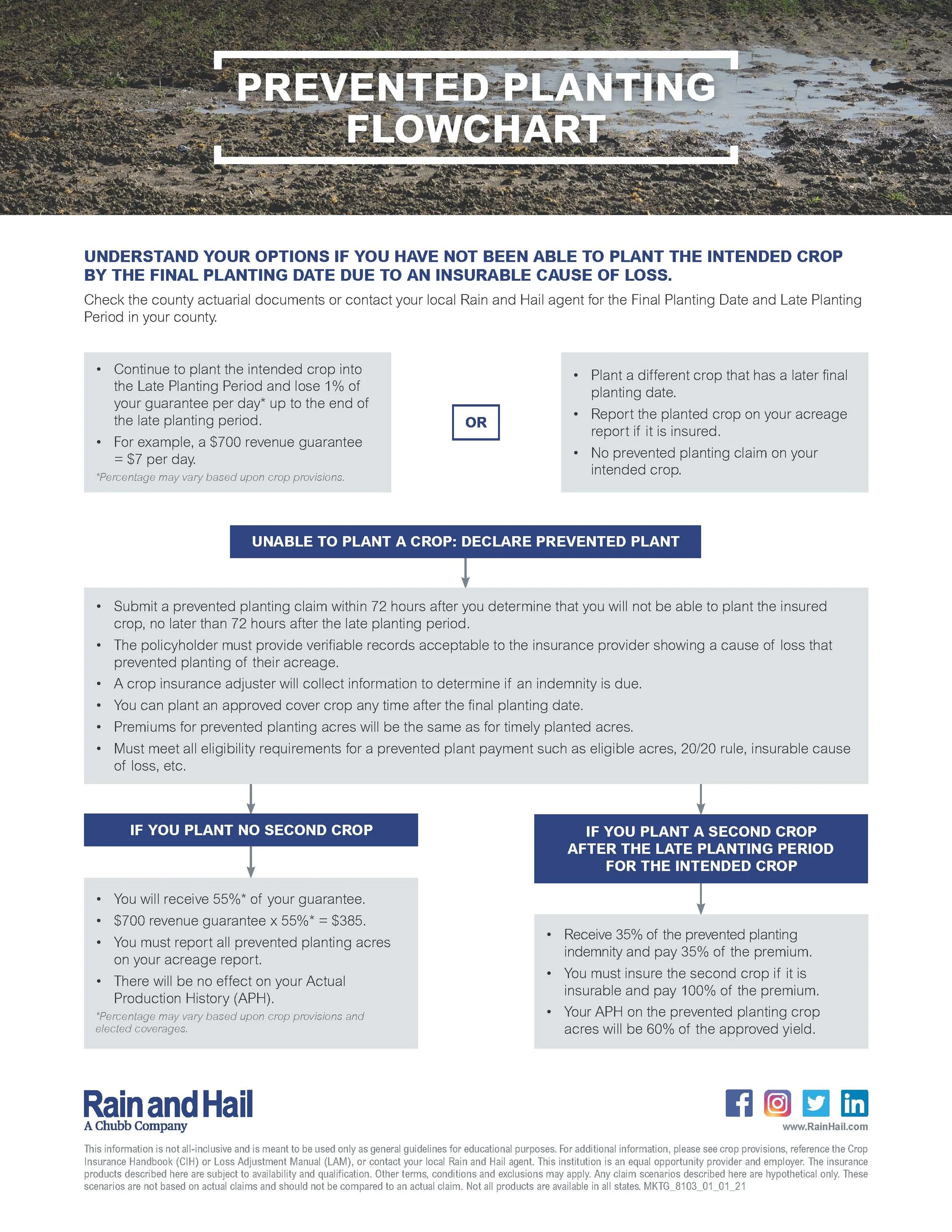
Prevented Planting
Acreage Reporting

When reporting your spring planted acres be sure to include the following information:
Crop, Type and Plant Date
Planted acres and/or Prevented Planting Acres
Legal Description and CLUs
List any person sharing and percentage
livestock risk protection

Livestock Risk Protection (LRP)
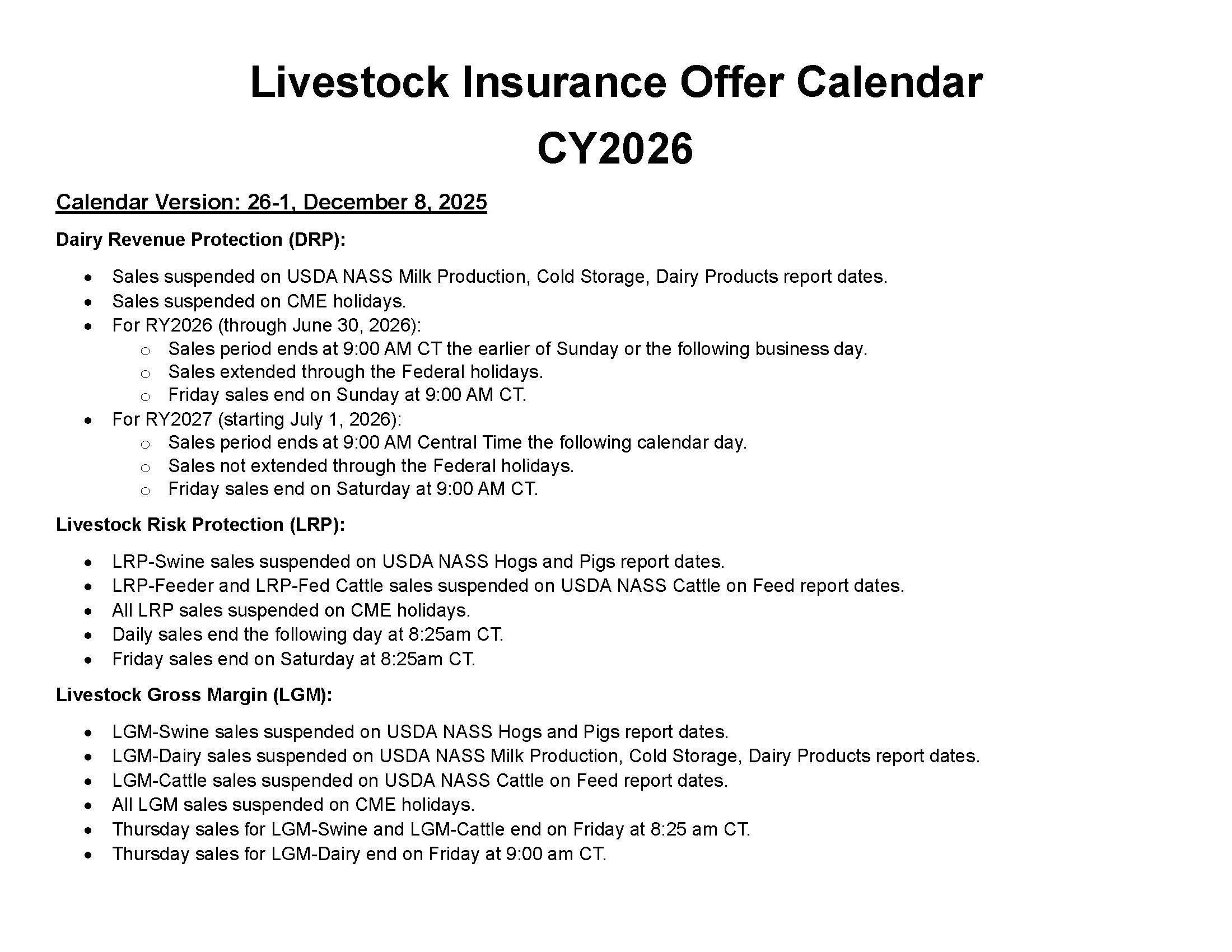
Livestock Risk Protection: Ensure a secure livestock investment with government-backed insurance. CIP Agency provides tailored support and expert advice to help protect your farm.
Introducing Livestock Risk Protection
At CIP Agency, we understand the vital role that livestock plays in the agricultural industry. That's why we're excited to introduce Livestock Risk Protection (LRP) to farmers and ranchers.
What is Livestock Risk Protection?
Livestock Risk Protection is a risk management tool that provides livestock producers with protection against unexpected price declines. With unpredictable market conditions and price volatility, LRP offers peace of mind by allowing producers to insure against potential losses in the value of their livestock.
Benefits of Livestock Risk Protection
Price Protection: LRP allows producers to establish a minimum price for their livestock, safeguarding against market downturns.
Flexibility: Producers can choose the coverage level and insurance period that best fits their operation, providing tailored protection for their unique needs.
Government-Backed: LRP is federally subsidized, making it an affordable and accessible risk management option for livestock producers.
How CIP Agency Can Help
As your trusted insurance partner, CIP Agency is here to guide you through the process of securing Livestock Risk Protection. Our experienced agent is well-versed in agricultural risk management and will work with you to determine the coverage that aligns with your operation's goals.
Take Control of Your Livestock's Future
Don't let market uncertainty impact your bottom line. With Livestock Risk Protection from CIP Agency, you can proactively manage risk and protect the financial well-being of your operation. Contact us today to learn more about how LRP can benefit your livestock business.
Protecting your livestock, securing your future.


SDRP Stage 2
The Supplemental Disaster Relief Program (SDRP) Stage 2 provides financial assistance to farmers who experienced crop losses in 2023 or 2024 that weren’t fully covered by crop insurance or the Noninsured Crop Disaster Assistance Program (NAP). It is designed to fill gaps left after traditional coverage, offering payments for shallow losses and uninsured disaster impacts. Farmers can apply through their local USDA Farm Service Agency (FSA) office, using existing crop insurance or NAP records to document losses. Applications are open now and must be submitted by August 12, 2026, so producers should gather their records early and work directly with FSA staff to ensure eligibility and timely payment
Projected and Harvest Price

projected & harvest price
In the realm of crop insurance, understanding projected and harvest prices is critical for farmers, insurers, and stakeholders. These prices are pivotal factors that influence insurance
Projected and Harvest Prices for Crop Insurance
Projected Prices
Projected prices are determined prior to the planting season and set the baseline for premium calculations. These prices are based on market data, historical trends, and the supply and demand dynamics observed in commodities markets. The Risk Management Agency (RMA) provides these figures, which are derived from futures prices on designated commodity exchanges.
Importance
Premium Calculation: Projected prices help establish premium rates for revenue protection policies.
Financial Planning: Farmers use projected prices to plan their budgets and assess potential revenues.
Market Signals: They provide insights into market expectations regarding future conditions and potential crop value.
Harvest Prices
Harvest prices are determined at the time of harvest and reflect the actual market conditions at that point. These prices are based on the average cash prices received for the crop during the harvest period.
Importance
Claims Resolution: Harvest prices are vital for determining indemnity payments in case of crop loss.
Risk Management: They allow farmers to assess their actual earnings compared to what was projected.
Market Dynamics: Harvest prices can indicate changes in market demand and supply, influencing future planting decisions.
Comparison of Projected and Harvest Prices
Volatility: Projected prices are typically more stable and predictable, while harvest prices can fluctuate significantly based on unforeseen events such as weather conditions, disease outbreaks, or changes in market conditions.
Impact on Revenue Protection: If the harvest price is lower than the projected price, farmers may receive indemnity payments, providing a safety net against losses.
Conclusion
Understanding the dynamics of projected and harvest prices is essential for effective risk management in agriculture. Both figures serve crucial roles in shaping the decision-making processes of farmers and the operations of insurance providers. Proper knowledge of these concepts can help mitigate financial risks associated with crop production.
To view current prices, click below
crop hail


production records and retention